wp:paragraph
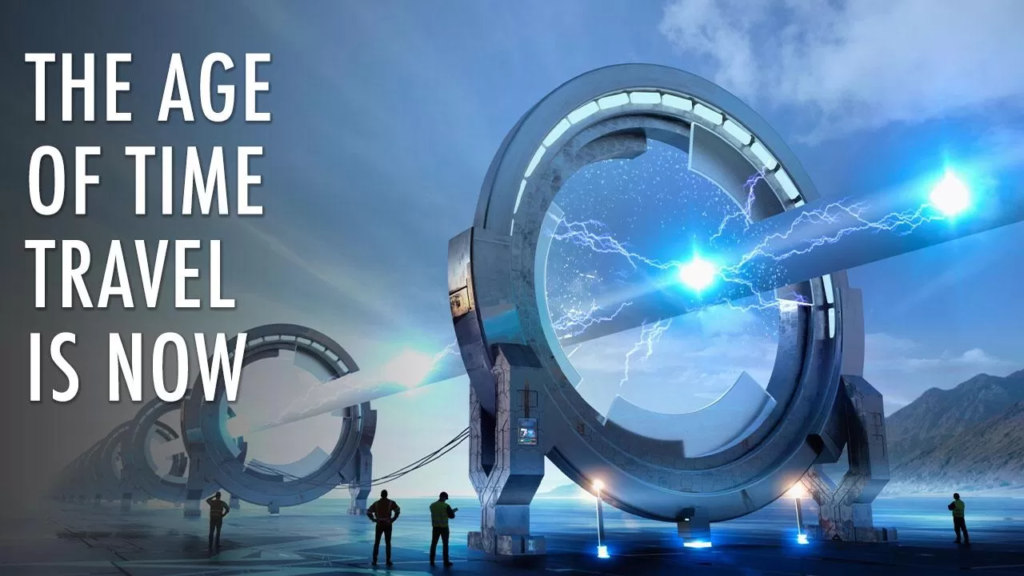
Time travel is one of the most fascinating ideas in science. It appears in movies, novels, television shows, and almost every discussion about the mysteries of the universe. The idea is simple but powerful: what if a person could travel into the future, return to the past, change history, meet their younger self, or see what Earth looks like thousands of years from now?
/wp:paragraph
wp:paragraph
But is time travel actually possible?
/wp:paragraph
wp:paragraph
The scientific answer is more interesting than a simple yes or no. According to modern physics, time travel to the future is real in a limited sense. It happens because time does not pass at the same rate for everyone. Einstein’s theory of relativity shows that time can slow down for objects moving at high speeds or experiencing strong gravity. NASA explains that, according to relativity, the faster you travel, the slower you experience time compared with someone who is not moving as fast.
/wp:paragraph
wp:paragraph
However, time travel to the past is a much bigger problem. Some mathematical ideas in physics suggest unusual possibilities, such as closed timelike curves or wormholes, but there is no confirmed evidence that humans can travel back in time, change history, or build a real time machine. Stanford’s discussion of time travel in modern physics explains that closed timelike curves are theoretical space-time paths that loop back on themselves, but this does not mean practical time machines exist.
/wp:paragraph
wp:paragraph
So the most accurate answer is this: traveling into the future is supported by real physics, but traveling into the past remains unproven, speculative, and possibly impossible.
/wp:paragraph
wp:paragraph
For another extreme space-time topic, you can read What Happens If You Fall Into a Black Hole?.
/wp:paragraph
wp:heading
Accuracy note
/wp:heading
wp:paragraph
This article explains time travel from a science-first perspective. It separates confirmed physics from theoretical ideas and science fiction. Time dilation is real and measurable. Past-directed time travel, wormholes, and time machines remain speculative and unproven.
/wp:paragraph
wp:paragraph
The goal is not to remove wonder from the topic. The goal is to explain what scientists actually think, what evidence supports, and where the mystery remains open.
/wp:paragraph
wp:heading
Key Facts About Time Travel
/wp:heading
wp:table
| Key Idea | What It Means | Scientific Status |
|---|---|---|
| Time travel to the future | Moving into the future faster than others because your time passes more slowly | Real through relativity |
| Time dilation | Time passes at different rates depending on speed or gravity | Confirmed by experiments and practical systems |
| Special relativity | Fast motion affects time and space | Well-established physics |
| General relativity | Gravity bends space-time and affects time | Well-established physics |
| GPS clock correction | Satellite clocks need relativity corrections | Real-world proof of relativistic time effects |
| Black holes | Strong gravity can create extreme time dilation | Real objects, but dangerous and not time machines |
| Wormholes | Hypothetical shortcuts through space-time | Not confirmed to exist as usable tunnels |
| Closed timelike curves | Mathematical paths that loop back in time | Theoretical, not practical evidence |
| Changing the past | Returning to alter history | No confirmed evidence |
/wp:table
wp:heading
What Does Time Travel Actually Mean?
/wp:heading
wp:paragraph
Time travel means moving through time in a way that is different from normal experience.
/wp:paragraph
wp:paragraph
In everyday life, everyone moves forward through time. One second passes, then another. In that basic sense, we are all traveling into the future at the normal rate.
/wp:paragraph
wp:paragraph
But when people ask whether time travel is possible, they usually mean something different. They mean one of two things:
/wp:paragraph
wp:paragraph
Can someone travel into the future faster than everyone else?
/wp:paragraph
wp:paragraph
Can someone travel back into the past?
/wp:paragraph
wp:paragraph
Science treats these questions differently.
/wp:paragraph
wp:paragraph
Traveling into the future is possible through time dilation. Traveling into the past is much more uncertain and controversial.
/wp:paragraph
wp:heading
Einstein Changed the Meaning of Time
/wp:heading
wp:paragraph
Before Einstein, many people thought time was universal. In that view, one second was the same everywhere for everyone.
/wp:paragraph
wp:paragraph
Einstein changed that idea.
/wp:paragraph
wp:paragraph
His theory of special relativity showed that space and time are linked, and that time can pass differently for observers moving at different speeds. NASA’s relativity explanation says Einstein’s 1905 special theory of relativity showed that space and time are altered near the speed of light; distances contract and clocks tick more slowly.
/wp:paragraph
wp:paragraph
Later, Einstein’s general theory of relativity showed that gravity is connected to the bending of space-time. Strong gravity can also affect how time passes.
/wp:paragraph
wp:paragraph
This means time is not a fixed background clock for the entire universe. Time is part of space-time, and it can stretch, slow, and behave differently depending on speed and gravity.
/wp:paragraph
wp:paragraph
That is the scientific door through which real time travel enters.
/wp:paragraph
wp:heading
Time Travel to the Future Is Real
/wp:heading
wp:paragraph
Time travel to the future is not just science fiction. It is a real effect predicted by relativity.
/wp:paragraph
wp:paragraph
If you travel very fast, close to the speed of light, time passes more slowly for you compared with people who remain behind. When you return, less time may have passed for you than for them.
/wp:paragraph
wp:paragraph
This does not mean you vanish and appear in the future like a movie character. It means your clock, your body, and your experience of time run more slowly compared with people in a different frame of reference.
/wp:paragraph
wp:paragraph
NASA’s Space Place gives a simple example: one clock stays on Earth, while another clock flies in an airplane. When compared afterward, the clocks do not match exactly because motion and gravity affect time.
/wp:paragraph
wp:paragraph
In simple words, if you move fast enough, you can travel into Earth’s future.
/wp:paragraph
wp:heading
Example: The Astronaut Time Travel Effect
/wp:heading
wp:paragraph
Astronauts already experience a tiny form of time travel.
/wp:paragraph
wp:paragraph
Astronauts orbit Earth at high speed. Because of special relativity, their motion causes their time to pass slightly differently compared with people on Earth. The effect is extremely small at current spacecraft speeds, but it is real.
/wp:paragraph
wp:paragraph
This means astronauts can age a tiny bit differently from people who stay on Earth.
/wp:paragraph
wp:paragraph
The effect is not dramatic enough to let someone jump hundreds of years into the future. But it proves the basic idea: time does not pass exactly the same for everyone.
/wp:paragraph
wp:heading
GPS Proves Time Is Not the Same Everywhere
/wp:heading
wp:paragraph
One of the best everyday examples of time dilation is GPS.
/wp:paragraph
wp:paragraph
GPS satellites carry extremely accurate atomic clocks. These satellites move fast around Earth and also experience weaker gravity than clocks on the ground. Both effects matter.
/wp:paragraph
wp:paragraph
NIST explains that GPS satellites move so fast that special relativity makes their clocks fall behind Earth-based clocks by about 7 microseconds per day, while weaker gravity in orbit makes them speed up by about 45 microseconds per day compared with clocks on Earth. The system must account for these effects to remain accurate.
/wp:paragraph
wp:paragraph
NASA also explains that relativity is critical for GPS because clocks under stronger gravity run at a slower rate than clocks in weaker gravity, and GPS must correct for these small time differences to calculate accurate positions.
/wp:paragraph
wp:paragraph
This is important because GPS is not science fiction. It is a technology people use every day. If relativity were ignored, GPS location accuracy would quickly become unreliable.
/wp:paragraph
wp:paragraph
So when someone asks, “Is time travel real?” one answer is: yes, in the form of measurable time dilation.
/wp:paragraph
wp:heading
The Twin Paradox: A Classic Time Travel Example
/wp:heading
wp:paragraph
The twin paradox is one of the most famous thought experiments in relativity.
/wp:paragraph
wp:paragraph
Imagine two twins. One stays on Earth. The other travels through space in a very fast spacecraft, close to the speed of light, and later returns.
/wp:paragraph
wp:paragraph
Because the traveling twin moved at such high speed, time passed more slowly for them. When they return, they may be younger than the twin who stayed on Earth.
/wp:paragraph
wp:paragraph
This is not magic. It is special relativity.
/wp:paragraph
wp:paragraph
The “paradox” is that both twins might seem to think the other one was moving. But acceleration, turning around, and changing reference frames make the traveling twin’s path different. Physics resolves the apparent contradiction.
/wp:paragraph
wp:paragraph
This is one of the cleanest examples of future-directed time travel.
/wp:paragraph
wp:heading
Could We Travel Hundreds of Years Into the Future?
/wp:heading
wp:paragraph
In theory, yes.
/wp:paragraph
wp:paragraph
If a spacecraft could travel extremely close to the speed of light, the people inside could experience much less time than people on Earth. A journey that feels like a few years for the travelers could correspond to many more years passing on Earth.
/wp:paragraph
wp:paragraph
The problem is technology.
/wp:paragraph
wp:paragraph
Building a spacecraft that can carry humans close to the speed of light would require enormous energy, extreme shielding, advanced propulsion, and protection from particles and radiation. Even tiny bits of dust become dangerous at relativistic speeds.
/wp:paragraph
wp:paragraph
So the physics allows future time travel through high-speed travel, but current human technology is nowhere close to making dramatic time jumps practical.
/wp:paragraph
wp:heading
Gravity Can Also Change Time
/wp:heading
wp:paragraph
Speed is not the only way time can change. Gravity also affects time.
/wp:paragraph
wp:paragraph
General relativity says that stronger gravity makes time pass more slowly compared with weaker gravity. This effect is called gravitational time dilation.
/wp:paragraph
wp:paragraph
Near a black hole, the effect can become extreme. NASA explains that close to a black hole, time passes slower than it does farther away because massive objects create strong gravitational fields that curve and stretch space-time.
/wp:paragraph
wp:paragraph
This is why black holes are often connected with time travel discussions.
/wp:paragraph
wp:paragraph
However, a black hole is not a safe time machine. It is an extreme gravitational object. If you get too close, you may face deadly radiation, tidal forces, spaghettification, and the event horizon.
/wp:paragraph
wp:paragraph
For a full explanation, read What Happens If You Fall Into a Black Hole?.
/wp:paragraph
wp:heading
Example: Time Near a Black Hole
/wp:heading
wp:paragraph
Imagine a spacecraft hovering near a very massive black hole while another spacecraft stays far away.
/wp:paragraph
wp:paragraph
The crew near the black hole may experience time differently from the crew far away. To the distant crew, the near-black-hole crew’s clock may appear to run more slowly.
/wp:paragraph
wp:paragraph
This is not just a movie idea. The basic effect comes from general relativity. But surviving near a black hole is another matter. Real black holes can have dangerous accretion disks, intense radiation, and extreme gravity.
/wp:paragraph
wp:paragraph
So black holes show that time can behave strangely, but they do not give us a practical travel method.
/wp:paragraph
wp:heading
Can We Travel Back in Time?
/wp:heading
wp:paragraph
Traveling back in time is much more difficult.
/wp:paragraph
wp:paragraph
Future-directed time travel is supported by real physics because time dilation has been measured. Past-directed time travel is different because it creates logical and physical problems.
/wp:paragraph
wp:paragraph
The biggest issue is causality.
/wp:paragraph
wp:paragraph
Causality means cause comes before effect. If you travel back in time and change something, you may create contradictions.
/wp:paragraph
wp:paragraph
The famous example is the grandfather paradox: if a person travels back in time and prevents their grandfather from meeting their grandmother, then the traveler would never be born. But if the traveler was never born, how did they travel back in time?
/wp:paragraph
wp:paragraph
This is why past time travel is not just an engineering problem. It is a deep problem about logic, cause and effect, and the structure of the universe.
/wp:paragraph
wp:heading
Closed Timelike Curves: Theoretical Paths to the Past
/wp:heading
wp:paragraph
Some solutions in general relativity allow the idea of closed timelike curves.
/wp:paragraph
wp:paragraph
A closed timelike curve is a path through space-time that loops back to its starting point. Stanford’s discussion explains that some definitions of time travel involve closed timelike curves, where a timelike path in space-time returns to its starting point.
/wp:paragraph
wp:paragraph
In theory, a traveler following such a path could arrive at an earlier time.
/wp:paragraph
wp:paragraph
But this is not the same as having a working time machine. Closed timelike curves appear in unusual mathematical solutions, but scientists do not know whether they can exist in the real universe in a stable, usable, physical way.
/wp:paragraph
wp:paragraph
They may require impossible conditions, exotic matter, extreme rotation, or space-time structures that cannot actually form.
/wp:paragraph
wp:heading
Wormholes: Shortcut or Science Fiction?
/wp:heading
wp:paragraph
Wormholes are one of the most popular time travel ideas.
/wp:paragraph
wp:paragraph
A wormhole is a hypothetical tunnel through space-time. In science fiction, wormholes often connect distant places or different times.
/wp:paragraph
wp:paragraph
Some theoretical work suggests wormholes could, under certain conditions, create time travel-like effects. But this remains highly speculative. NOVA’s discussion of wormholes explains the idea as a possible shortcut through space-time, while also showing that it belongs to the theoretical edge of physics rather than confirmed technology.
/wp:paragraph
wp:paragraph
The major problem is that usable wormholes have never been observed. They may require exotic matter with negative energy to stay open. Even if such matter exists in the required form, building or controlling a wormhole is far beyond known technology.
/wp:paragraph
wp:paragraph
So wormholes are interesting for theoretical physics, but they are not evidence that humans can travel into the past.
/wp:paragraph
wp:heading
Black Holes Are Not Proven Portals
/wp:heading
wp:paragraph
Black holes are often imagined as gateways to other universes or time tunnels.
/wp:paragraph
wp:paragraph
But NASA clearly states that black holes are not wormholes and do not provide shortcuts between points in space or portals to other dimensions or universes.
/wp:paragraph
wp:paragraph
This is important for accurate science writing.
/wp:paragraph
wp:paragraph
Black holes are real. Their gravity is extreme. They affect time. But that does not mean they are safe entrances to another era or another universe.
/wp:paragraph
wp:paragraph
In science, “unknown” does not mean “portal.” It means scientists do not yet have a complete theory for what happens in the deepest regions of extreme space-time.
/wp:paragraph
wp:heading
The Grandfather Paradox
/wp:heading
wp:paragraph
The grandfather paradox is one of the clearest problems with traveling to the past.
/wp:paragraph
wp:paragraph
If a traveler goes back in time and changes an event that allowed them to exist, a contradiction appears. For example, if the traveler prevents their own birth, then they could not have traveled back to prevent it.
/wp:paragraph
wp:paragraph
Scientists and philosophers have proposed different possible responses.
/wp:paragraph
wp:paragraph
One idea is that the universe may prevent contradictions. This is sometimes called a self-consistency idea.
/wp:paragraph
wp:paragraph
Another idea is that changing the past might create a separate timeline. This is popular in fiction but not confirmed by science.
/wp:paragraph
wp:paragraph
A third possibility is that past time travel is simply impossible because the universe protects causality.
/wp:paragraph
wp:paragraph
At the moment, there is no experimental evidence that humans can travel backward in time and test these ideas.
/wp:paragraph
wp:heading
The Self-Consistency Idea
/wp:heading
wp:paragraph
One possible way to avoid paradoxes is the self-consistency principle.
/wp:paragraph
wp:paragraph
This idea says that if time travel to the past were possible, events would have to remain consistent. You could not change the past in a way that creates a contradiction. Anything you did in the past would already be part of history.
/wp:paragraph
wp:paragraph
Example: if you traveled back to stop an event, your actions might accidentally help cause the event instead.
/wp:paragraph
wp:paragraph
This idea appears in many time travel stories, but it is also discussed seriously in some physics and philosophy contexts. Still, it does not prove time travel exists. It only suggests one possible way the universe might avoid contradictions if closed time-like paths were possible.
/wp:paragraph
wp:heading
Multiverse Timelines: Interesting but Unproven
/wp:heading
wp:paragraph
Another popular idea is that traveling to the past could create a new branch of reality.
/wp:paragraph
wp:paragraph
In this view, if you changed something in the past, you would not rewrite your own timeline. Instead, you would create or enter another timeline.
/wp:paragraph
wp:paragraph
This idea is common in movies and fiction because it avoids some paradoxes. But there is no confirmed evidence that time travel creates alternate timelines.
/wp:paragraph
wp:paragraph
The multiverse itself is an open and debated idea in physics and cosmology. It should not be presented as a confirmed solution to time travel.
/wp:paragraph
wp:heading
Why Scientists Are Careful About Past Time Travel
/wp:heading
wp:paragraph
Scientists are careful because past time travel creates major problems.
/wp:paragraph
wp:paragraph
It may violate causality.
It may require impossible energy conditions.
It may require exotic matter.
It may create paradoxes.
It may be unstable under quantum effects.
It may not be allowed by a complete theory of quantum gravity.
/wp:paragraph
wp:paragraph
Stephen Hawking famously suggested the idea of “chronology protection,” meaning the laws of physics may prevent time machines from forming. While this remains a theoretical idea, it reflects a serious scientific concern: the universe may protect cause and effect.
/wp:paragraph
wp:paragraph
In simple words, the fact that equations sometimes allow strange possibilities does not mean nature allows them in practical reality.
/wp:paragraph
wp:heading
Time Travel in Science Fiction vs Real Physics
/wp:heading
wp:table
| Science Fiction Idea | What Real Physics Says |
|---|---|
| Press a button and visit any year | No known technology can do this |
| Change the past freely | Creates causality paradoxes |
| Wormholes are easy shortcuts | Wormholes are hypothetical and unconfirmed |
| Black holes are portals | NASA says black holes are not wormholes or portals |
| Future travel is impossible | Future travel through time dilation is real |
| Time machines are only engineering problems | Past time travel may be physically impossible |
| Alternate timelines solve everything | Interesting idea, but not confirmed science |
/wp:table
wp:paragraph
Science fiction is valuable because it makes people curious. But science has to ask what evidence actually supports.
/wp:paragraph
wp:heading
Real Examples of Time Dilation
/wp:heading
wp:paragraph
Time dilation is not just theory. It appears in real science and technology.
/wp:paragraph
wp:paragraph
GPS satellites need relativity corrections. Without them, navigation would become inaccurate.
/wp:paragraph
wp:paragraph
Atomic clock experiments have shown that clocks moving at different speeds or existing at different gravitational potentials can measure different amounts of elapsed time. NASA’s Space Place explains the airplane clock example as one way scientists demonstrated time dilation.
/wp:paragraph
wp:paragraph
Astronauts experience tiny time differences because they move quickly relative to people on Earth.
/wp:paragraph
wp:paragraph
Black holes create extreme gravitational time dilation, though they are not practical time machines.
/wp:paragraph
wp:paragraph
These examples show that time is flexible in measurable ways.
/wp:paragraph
wp:heading
Could Humans Build a Time Machine?
/wp:heading
wp:paragraph
A future-travel machine is possible in principle if it means a spacecraft moving near light speed. The problem is that current technology is far from capable of safely accelerating humans to such speeds.
/wp:paragraph
wp:paragraph
A past-travel machine is much more doubtful. It may require wormholes, closed timelike curves, exotic matter, negative energy, or other conditions that are not known to be physically usable.
/wp:paragraph
wp:paragraph
So the honest answer is:
/wp:paragraph
wp:paragraph
A machine that sends people far into the future is allowed by relativity in principle.
/wp:paragraph
wp:paragraph
A machine that sends people into the past has no confirmed scientific support.
/wp:paragraph
wp:heading
Example Scenario: A Realistic Future Time Traveler
/wp:heading
wp:paragraph
Imagine a spacecraft that can travel close to the speed of light.
/wp:paragraph
wp:paragraph
A crew leaves Earth and travels through space for what feels like five years to them. Because they are moving so fast, time on Earth passes more quickly compared with their onboard clocks. When they return, decades may have passed on Earth.
/wp:paragraph
wp:paragraph
The crew did not disappear magically. They did not break physics. They simply experienced time differently because of extreme speed.
/wp:paragraph
wp:paragraph
This is one of the most realistic forms of time travel.
/wp:paragraph
wp:paragraph
The problem is that we do not currently have the propulsion, energy systems, shielding, or biological protection needed for such a journey.
/wp:paragraph
wp:heading
Example Scenario: A Past Time Machine Problem
/wp:heading
wp:paragraph
Now imagine someone builds a machine that sends them back 50 years.
/wp:paragraph
wp:paragraph
They meet their younger grandparents and accidentally prevent their parents from meeting. That creates a contradiction: if their parents never met, the traveler would never be born. But if the traveler was never born, they could not travel back and cause the change.
/wp:paragraph
wp:paragraph
This is why past time travel is so difficult. It is not just about building a machine. It is about whether the universe allows cause and effect to be broken.
/wp:paragraph
wp:heading
Time Travel and Black Holes
/wp:heading
wp:paragraph
Black holes are connected to time travel because they create extreme gravity.
/wp:paragraph
wp:paragraph
Near a black hole, time can pass much more slowly compared with distant regions. That makes black holes interesting for studying time dilation.
/wp:paragraph
wp:paragraph
But black holes are not safe travel tools. They can destroy matter through tidal forces, intense radiation, and the event horizon. Once something crosses the event horizon, it cannot escape.
/wp:paragraph
wp:paragraph
For related reading, see What Happens If a Black Hole Explodes? and What Happens If You Fall Into a Black Hole?.
/wp:paragraph
wp:heading
Time Travel and Future Space Exploration
/wp:heading
wp:paragraph
Future space exploration may make time dilation more noticeable.
/wp:paragraph
wp:paragraph
If humans eventually travel at much higher speeds than today’s spacecraft, relativistic effects will become more important. Interstellar travel, if it ever becomes possible, would need to account for time dilation seriously.
/wp:paragraph
wp:paragraph
Communication timing may also matter more in deep space. Even without time travel, space missions already require precise timing, navigation, and communication systems.
/wp:paragraph
wp:paragraph
For related space technology reading, see NASA Deep Space Laser Communication and NASA Next-Gen Space Telescopes Tech 2026.
/wp:paragraph
wp:heading
What People Often Get Wrong
/wp:heading
wp:paragraph
Many people think time travel is completely impossible. That is not correct. Future-directed time travel through time dilation is real.
/wp:paragraph
wp:paragraph
Another mistake is thinking time machines are almost ready. They are not. The effects we can produce today are tiny, and large-scale future travel would require extreme technology.
/wp:paragraph
wp:paragraph
A third mistake is thinking black holes are portals. NASA says black holes are not wormholes or gateways to other universes.
/wp:paragraph
wp:paragraph
A fourth mistake is thinking wormholes are confirmed. They are not. Wormholes are hypothetical and have not been observed as usable shortcuts.
/wp:paragraph
wp:paragraph
A fifth mistake is treating movie timelines as science. Alternate timelines, changing history, and meeting your past self are interesting story ideas, but they are not confirmed physics.
/wp:paragraph
wp:heading
Practical Reader Takeaway
/wp:heading
wp:paragraph
Time travel is partly real and partly speculative.
/wp:paragraph
wp:paragraph
Traveling into the future is real in the scientific sense because time dilation has been confirmed. High speed and strong gravity can make time pass differently for different observers. This effect is small in everyday life but real in technologies like GPS and in extreme environments such as near black holes.
/wp:paragraph
wp:paragraph
Traveling into the past is a different matter. Some equations allow strange possibilities, but there is no confirmed evidence that humans can move backward in time, change history, or build a working time machine.
/wp:paragraph
wp:paragraph
The simplest answer is this: future time travel is real physics; past time travel is still science fiction or unproven theory.
/wp:paragraph
wp:heading
Frequently Asked Questions
/wp:heading
wp:heading
Is time travel possible?
/wp:heading
wp:paragraph
Time travel to the future is possible through time dilation, which is a real effect predicted by relativity and measured in experiments. Time travel to the past remains unproven and may be impossible.
/wp:paragraph
wp:heading
Can humans travel to the future?
/wp:heading
wp:paragraph
In a limited sense, yes. Astronauts and fast-moving clocks experience tiny differences in time. A spacecraft traveling close to the speed of light could, in theory, allow humans to move far into Earth’s future.
/wp:paragraph
wp:heading
Can humans travel to the past?
/wp:heading
wp:paragraph
There is no confirmed evidence that humans can travel to the past. Past time travel creates problems with causality and paradoxes, and no working time machine has ever been built.
/wp:paragraph
wp:heading
What is time dilation?
/wp:heading
wp:paragraph
Time dilation is the effect where time passes at different rates depending on speed or gravity. A fast-moving clock or a clock in a different gravitational field may tick at a different rate compared with another clock.
/wp:paragraph
wp:heading
Does GPS prove time dilation?
/wp:heading
wp:paragraph
GPS relies on relativity corrections because satellite clocks are affected by both their speed and weaker gravity in orbit. NIST explains that satellite clocks experience measurable relativistic effects that must be corrected for accurate positioning.
/wp:paragraph
wp:heading
Are wormholes real?
/wp:heading
wp:paragraph
Wormholes are hypothetical. They are allowed in some theoretical discussions, but there is no confirmed evidence that usable wormholes exist.
/wp:paragraph
wp:heading
Are black holes time machines?
/wp:heading
wp:paragraph
Black holes create extreme time effects, but they are not practical time machines. NASA states that black holes are not wormholes or portals to other universes.
/wp:paragraph
wp:heading
What is the grandfather paradox?
/wp:heading
wp:paragraph
The grandfather paradox is a time travel problem where someone travels to the past and changes events in a way that prevents their own existence. It shows why past time travel creates logical contradictions.
/wp:paragraph
wp:heading
Could time travel happen in the future?
/wp:heading
wp:paragraph
Future-directed time travel through high-speed spaceflight is allowed by physics, but it requires technology far beyond what humans currently have. Past-directed time travel remains speculative.
/wp:paragraph
wp:heading
What do scientists really think about time travel?
/wp:heading
wp:paragraph
Scientists generally accept time dilation as real. Many are skeptical about travel to the past because it creates causality problems and lacks experimental evidence.
/wp:paragraph
wp:heading
Conclusion
/wp:heading
wp:paragraph
Time travel is not just fantasy, but it is not exactly what movies show either.
/wp:paragraph
wp:paragraph
Modern physics says time is flexible. It can pass differently depending on speed and gravity. This means traveling into the future is scientifically possible through time dilation. GPS satellites, atomic clocks, astronauts, and relativity all show that time does not flow at one universal rate.
/wp:paragraph
wp:paragraph
But traveling into the past is much more uncertain. Wormholes, closed timelike curves, and time machines are fascinating ideas, but they remain theoretical and unproven. No scientist has demonstrated a working method for going back in time or changing history.
/wp:paragraph
wp:paragraph
The best scientific answer is balanced: time travel to the future is real in principle, but time travel to the past remains one of the biggest unanswered questions in physics.
/wp:paragraph
wp:paragraph
In simple words, the future is open to relativity. The past is still protected by mystery.
/wp:paragraph
wp:heading
Sources and Further Reading
/wp:heading
wp:paragraph
NASA Space Place: Is Time Travel Possible?
NASA Imagine the Universe: Relativity
NASA Science: Black Holes
NASA Science: What Happens When Something Gets Too Close to a Black Hole?
NIST: Putting Einstein to the Test
NASA: Einstein’s Theory of Relativity, Critical for GPS
Stanford Encyclopedia of Philosophy: Time Travel and Modern Physics
Stanford Encyclopedia of Philosophy: Time Travel
PBS NOVA: Wormholes as Time Machines
/wp:paragraph